
When most people think of strength training, they picture traditional exercises like squats, deadlifts, and bench presses. While these movements are incredibly effective for building strength, there’s another training method that deserves just as much attention: unilateral training.
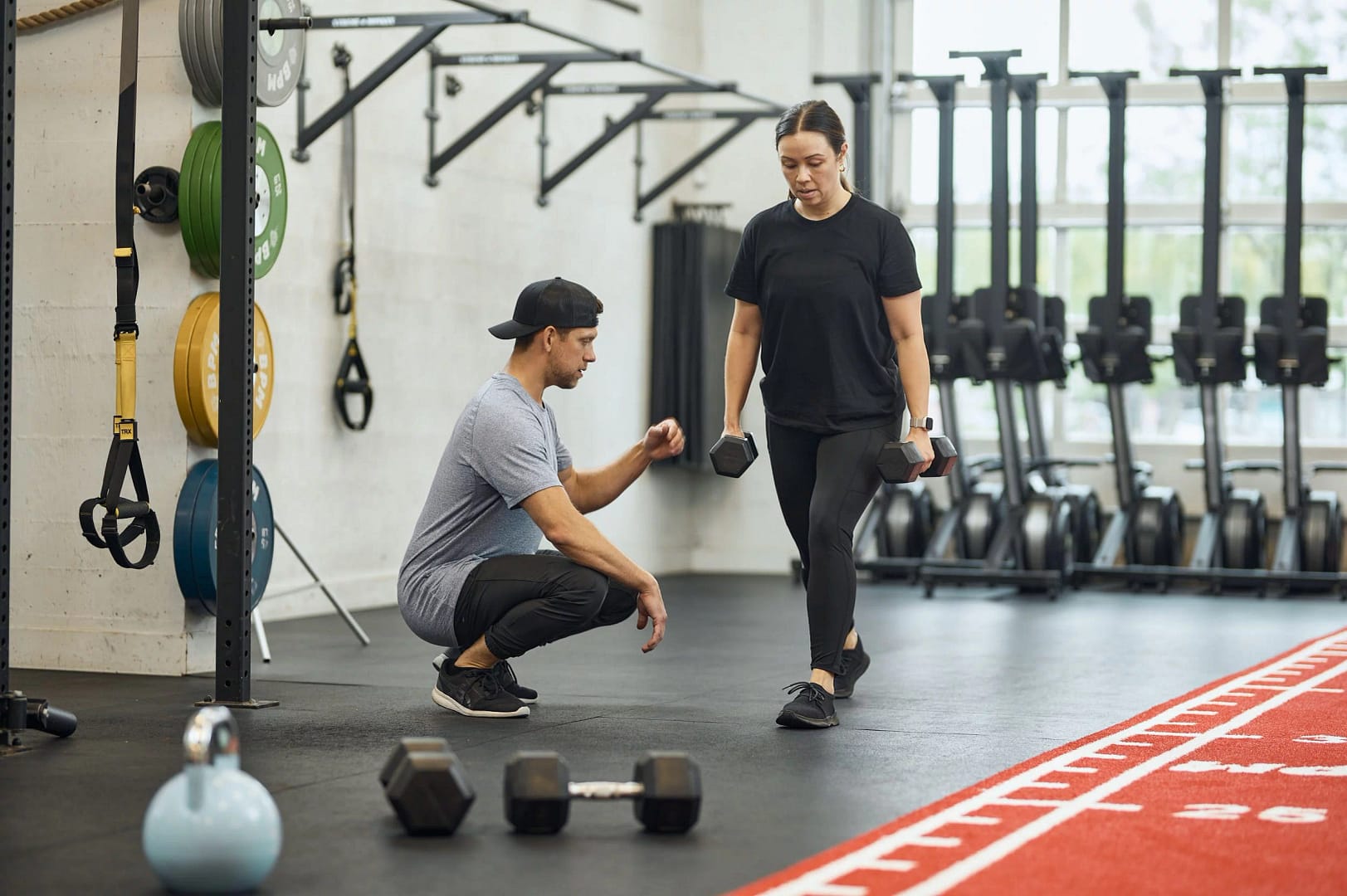
Unilateral exercises involve training one side of the body at a time, such as performing a single-leg squat, single-arm dumbbell press, or reverse lunge.
Unlike bilateral exercises, which use both limbs simultaneously, unilateral movements challenge your body to stabilize, coordinate, and generate force independently.
At BPM Fitness Centre, we incorporate unilateral strength training into our functional fitness classes and personal training programs to help members develop well-rounded strength that translates beyond the gym.
Whether you’re an athlete preparing for competition or simply looking to move more confidently throughout everyday life, unilateral exercises offer tremendous benefits.
1. Improve Balance and Stability Through Single-Leg Training
One of the greatest benefits of unilateral training is its ability to improve balance and stability.
When performing a traditional squat, both legs share the responsibility of supporting your body. However, during a single-leg Romanian deadlift or split squat, your body must work harder to maintain proper alignment and control.
These movements challenge your:
- Core stabilizers: Help maintain trunk positioning and resist unwanted movement.
- Hip stabilizers: Support pelvic control and lower-body alignment.
- Ankle stabilizers: Help maintain balance and control your centre of mass.
- Proprioception: Your body’s ability to sense joint position and movement.
Research suggests that targeted balance and resistance training can improve postural control and neuromuscular function.
At BPM Fitness Centre in Victoria, our group fitness classes incorporate movements that challenge stability while developing practical strength.
The result? Better control during exercise and improved confidence when navigating everyday physical activities.
2. Develop Better Coordination and Neuromuscular Control
Unilateral exercises aren’t just about building muscle. They’re also about improving communication between your brain and body.
This communication is known as neuromuscular coordination, which involves your nervous system activating muscles in the appropriate sequence and intensity to produce efficient movement.
When performing a single-arm dumbbell row, for example, your body must coordinate the pulling muscles while preventing unnecessary trunk rotation.
Similarly, a single-leg step-up requires coordination between the hips, knees, ankles, and core.
Over time, practicing these movements can improve:
- Movement precision and body awareness
- Coordination between muscle groups
- Control during dynamic activities
- Confidence performing complex movement patterns
These benefits are particularly valuable for recreational athletes, runners, and individuals participating in functional fitness.
Our BPM personal trainers emphasize movement quality and progressive exercise programming to help members develop strength alongside coordination.
3. Identify and Address Strength Imbalances
Almost everyone has a dominant side.
You might naturally carry groceries with one arm, push harder through one leg, or favour one side during certain exercises.
While minor differences between limbs are normal, substantial strength or control imbalances can sometimes affect movement efficiency.
Unilateral strength training allows each side of the body to work independently, making differences easier to identify.
For example, performing Bulgarian split squats might reveal that one leg has greater strength, mobility, or stability than the other.
By incorporating single-limb exercises into a structured resistance training program, individuals can progressively strengthen both sides.
Importantly, unilateral training doesn’t guarantee injury prevention, but it can help address specific strength deficits and improve movement control.
At BPM Fitness Centre, our personal training programs can be tailored to individual abilities, training goals, and movement limitations.
4. Build Functional Strength for Everyday Life
Functional strength refers to your ability to produce and control force during meaningful physical activities.
Think about how often daily life requires you to use one limb independently.
Walking upstairs, stepping over obstacles, carrying luggage, and reaching overhead all involve varying degrees of unilateral movement.
That’s why single-leg and single-arm exercises are valuable additions to a comprehensive strength training program.
Some effective unilateral exercises include:
| Exercise | Primary benefit |
|---|---|
| Bulgarian Split Squat | Lower-body strength and hip stability |
| Single-Leg Romanian Deadlift | Posterior-chain strength and balance |
| Single-Arm Dumbbell Press | Shoulder strength and trunk control |
| Reverse Lunge | Lower-body coordination and stability |
| Single-Arm Farmer Carry | Grip strength and anti-lateral-flexion control |
| Single-Leg Step-Up | Functional leg strength and coordination |
By strengthening these movement patterns, you’re preparing your body for physical demands that extend beyond traditional gym exercises.
5. Enhance Athletic Performance and HYROX Training
Unilateral training is particularly beneficial for athletes participating in running, recreational sports, and HYROX competitions.
Running involves repeatedly supporting and propelling your body from one leg to the other. Developing single-leg strength and stability can support the physical demands of this movement.
Likewise, HYROX athletes benefit from unilateral exercises that challenge lower-body endurance, trunk stability, and coordination.
Movements such as walking lunges require athletes to repeatedly transfer weight while maintaining efficient positioning.
At BPM’s HYROX Training Centre, unilateral exercises can complement traditional strength and conditioning workouts to help athletes prepare for demanding race-day movements.
6. Why Unilateral Training Belongs in Every Fitness Program
The most effective training programs don’t rely exclusively on unilateral or bilateral exercises.
Instead, they combine both.
Bilateral exercises are excellent for developing maximal strength and handling heavier external loads, while unilateral exercises introduce additional challenges involving balance, coordination, and independent limb control.
Together, these approaches create a more comprehensive strength training program.
At BPM Fitness Centre, our experienced coaches integrate functional movement patterns into strength training, conditioning, and individualized fitness programs.
Whether you’re new to exercise or an experienced athlete, unilateral training can be adapted to your current fitness level.
Build Stronger, More Balanced Movement at BPM Fitness Centre
Strength isn’t simply about how much weight you can lift. It’s also about how effectively you control that strength.
By incorporating unilateral exercises into your routine, you can develop better coordination, improve stability, address strength imbalances, and build functional strength for everyday activities.
Ready to experience the benefits of functional strength training in Victoria, BC?
Contact BPM Fitness Centre to get started.
Train smarter. Move better. Build strength for life.
References
- Liao, K.-F., Nassis, G. P., Bishop, C., Yang, W., Bian, C., & Li, Y.-M. (2022). Effects of unilateral vs. bilateral resistance training interventions on measures of strength, jump, linear and change of direction speed: A systematic review and meta-analysis. Biology of Sport, 39(3), 485–497. https://pubmed.ncbi.nlm.nih.gov/35959319/
- Zhang, W., Chen, X., Xu, K., Xie, H., Li, D., Ding, S., & Sun, J. (2023). Effect of unilateral training and bilateral training on physical performance: A meta-analysis. Frontiers in Physiology, 14, Article 1128250. https://pubmed.ncbi.nlm.nih.gov/37123275/
- Kassiano, W., Nunes, J. P., Costa, B., Ribeiro, A. S., Loenneke, J. P., & Cyrino, E. S. (2025). Comparison of muscle growth and dynamic strength adaptations induced by unilateral and bilateral resistance training: A systematic review and meta-analysis. Sports Medicine, 55(4), 923–936. https://pubmed.ncbi.nlm.nih.gov/39794667/