Whether you play golf, soccer, hockey, tennis, pickleball, basketball, or another recreational or competitive sport, improving your performance requires more than simply practising your game. Sport-specific skills matter, but they depend on a strong foundation of mobility, stability, strength, power, endurance, and coordination. That is where personal training for sports performance can make a meaningful difference.
At BPM Fitness Centre, our personal trainers help athletes and active adults in Victoria build the physical qualities their sports demand. With an individualized training plan, expert coaching, and consistent progress tracking, personal training can help you move more efficiently, perform with greater confidence, and stay active throughout your season.
What Is Sports Performance Personal Training?
Sports performance training is exercise designed around the specific movements, physical demands, and goals of an athlete or active individual. Unlike a general workout program, a personalized sports training plan considers your sport, training history, schedule, current abilities, previous injuries, and areas for improvement.
A golfer may need greater rotational mobility, core stability, balance, and power. A runner may benefit from improved lower-body strength, aerobic conditioning, and running mechanics. Court-sport athletes often require acceleration, deceleration, lateral movement, and quick changes of direction.
Through personal training at BPM Fitness Centre, your program can be adapted to what you actually need—not what happens to be trending online.
Build Strength That Transfers to Your Sport
Strength training is one of the most valuable components of athletic development. Greater strength can improve your ability to produce force, control movement, maintain good positioning, and tolerate the repeated demands of training and competition.
However, effective strength training for athletes is not about performing random exercises or lifting as much weight as possible. Exercise selection, technique, training volume, intensity, and recovery must all support the athlete’s goals.
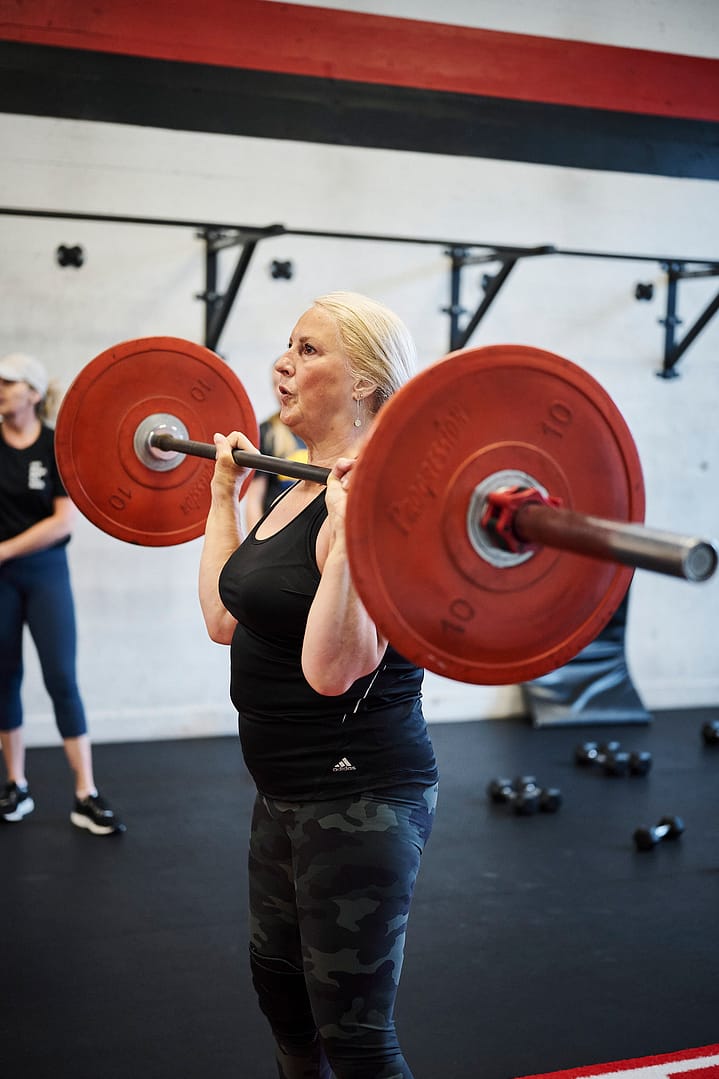
A qualified personal trainer can select movements that address your individual needs while teaching proper technique. Squats, hinges, lunges, pushes, pulls, carries, jumps, and rotational exercises may all be included, but the exact combination will depend on your sport and current ability.
The goal is not simply to become stronger in the gym. It is to develop strength that helps you perform better outside it.
Improve Mobility, Stability, and Movement Quality
Sports require the body to move through many different positions, often at speed. If an athlete lacks mobility in one area or control in another, the body may compensate. This can make movement less efficient and potentially increase stress elsewhere.
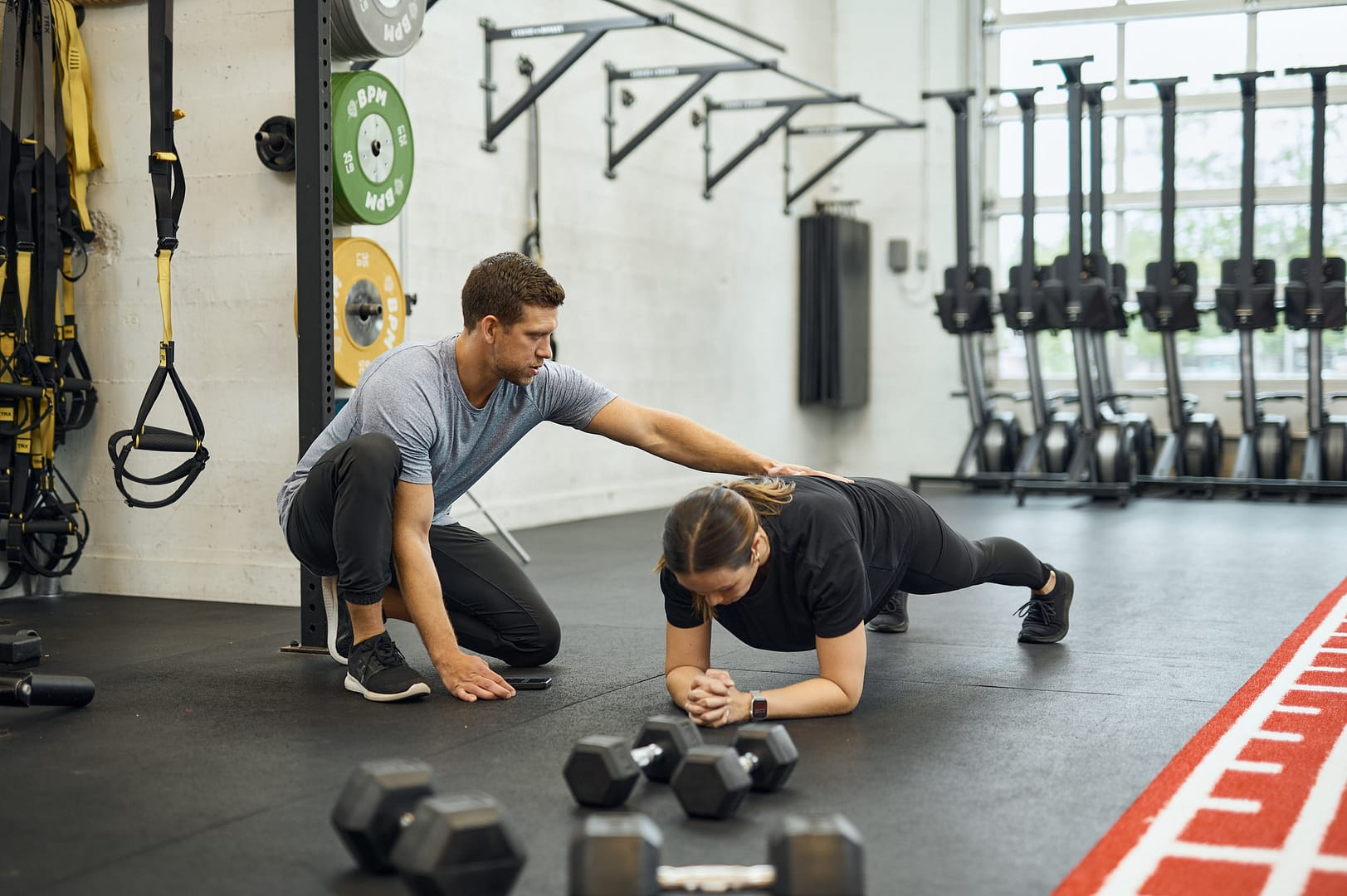
A trainer can assess how you move before building your program. This may include evaluating joint mobility, balance, posture, core control, and fundamental movement patterns.
Personal training for sports performance allows exercises to be modified as your abilities change. Instead of forcing everyone into the same routine, your trainer can help you improve the range of motion you need while developing strength and control within that range.
For runners and athletes whose sports involve significant running, BPM’s Performance+ Running Assessment offers additional insight through biomechanical screening, treadmill gait analysis, and an indirect VO₂ max assessment.
Develop Speed, Power, and Endurance
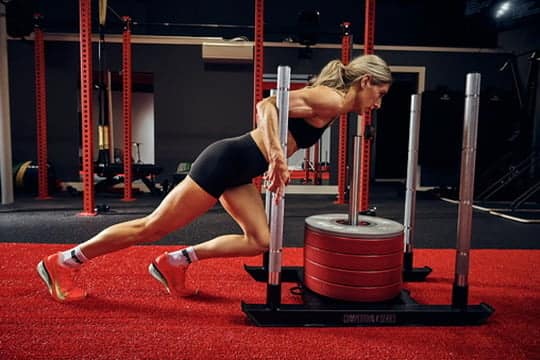
Strength provides a foundation, but many sports also demand the ability to use that strength quickly. Power training may include jumps, medicine-ball exercises, loaded carries, or other explosive movements selected for the athlete’s experience and goals.
Conditioning is equally important. A golfer walking a full course, a soccer player completing repeated sprints, and a HYROX athlete moving between running and functional stations all face different energy demands. Their conditioning programs should reflect those differences.
Personal training helps match your cardio and strength work to your sport. It can also prevent every session from becoming an exhausting, high-intensity workout. Hard training has a place, but so do technical sessions, moderate training days, and recovery. A balanced plan helps athletes improve without treating fatigue as the only measure of success.
Add Structure and Accountability to Your Training
One of the biggest advantages of working with a personal trainer is having a clear plan.
Many athletes know they should strength train but are unsure which exercises to choose, how often to train, or how to progress. Others repeat the same routine for months without knowing whether it is still serving their goals.
A BPM personal trainer can organize your training around practices, games, tournaments, and other commitments. Your program can change between the off-season, pre-season, competitive season, and recovery periods.
Regular coaching also creates accountability. Your trainer can monitor technique, adjust exercises, track progress, and help you remain consistent when life gets busy.
Start Sports Performance Training at BPM Fitness Centre
The best sports performance program is not copied from another athlete. It is built around your body, your sport, and your goals.
At BPM Fitness Centre in Victoria, BC, our experienced trainers provide individualized coaching in a welcoming private-studio environment. Whether you want to improve strength, mobility, speed, endurance, golf performance, or overall athletic ability, we can help you create a practical plan.
Explore personal training at BPM or contact our team to book a fitness assessment. Train with purpose, build confidence, and bring your best to the field, court, track—or fairway.
References
- Wang, X., Soh, K. G., Samsudin, S., Deng, N., Liu, X., Zhao, Y., & Akbar, S. (2023). Effects of high-intensity functional training on physical fitness and sport-specific performance among the athletes: A systematic review with meta-analysis. PloS one, 18(12), e0295531. https://pubmed.ncbi.nlm.nih.gov/38064433/
- Thurlow, F., Huynh, M., Townshend, A., McLaren, S. J., James, L. P., Taylor, J. M., Weston, M., & Weakley, J. (2024). The effects of repeated-sprint training on physical fitness and physiological adaptation in athletes: A systematic review and meta-analysis. Sports Medicine, 54(4), 953–974. https://pubmed.ncbi.nlm.nih.gov/38041768/
- Ramos-Campo, D. J., Andreu-Caravaca, L., Clemente-Suárez, V. J., & Rubio-Arias, J. Á. (2025). The Effect of Strength Training on Endurance Performance Determinants in Middle- and Long-Distance Endurance Athletes: An Umbrella Review of Systematic Reviews and Meta-Analysis. Journal of strength and conditioning research, 39(4), 492–506. https://pubmed.ncbi.nlm.nih.gov/40153564/