The Running Gait Cycle Explained (And Why Your Form Matters More Than You Think)
Running looks simple. One foot in front of the other.
But underneath that simplicity is a highly coordinated sequence of movements known as the running gait cycle. Understanding it is one of the fastest ways to improve performance, reduce injury risk, and become a more efficient runner.
Whether you’re training with a run club in Victoria BC, preparing for a race, or just getting started, this matters.
The Phases of the Running Gait Cycle
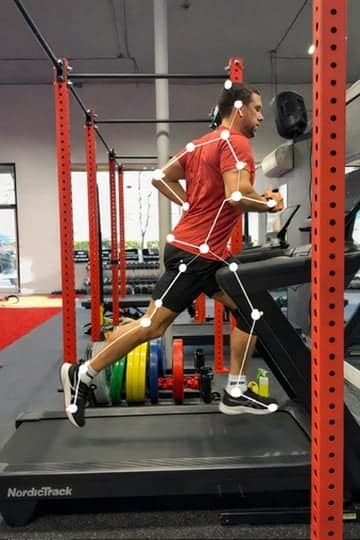
A full running stride (gait cycle) begins when one foot contacts the ground and ends when that same foot contacts again.
It is broadly divided into two main phases:
1. Stance Phase (Ground Contact)
This is when your foot is in contact with the ground. It makes up roughly 60% of the running cycle.
It includes:
- Initial Contact (Foot Strike)
Your foot hits the ground (heel, midfoot, or forefoot). - Loading / Absorption
Your body absorbs impact forces through the ankle, knee, and hip. - Midstance
Your body passes over your foot — this is your balance and control phase. - Toe-Off (Propulsion)
You push off the ground, generating forward momentum.
This is where force production and injury risk are highest.
2. Swing Phase (Flight Phase)
This is when your foot is off the ground, accounting for about 40% of the cycle.
It includes:
- Initial Swing – your foot leaves the ground
- Mid Swing – your leg passes under your body
- Terminal Swing – your leg prepares for the next contact
Running differs from walking because there’s a float phase where neither foot is on the ground.
Why Biomechanics Matter
Running is essentially a cycle of force absorption → stability → propulsion.
Research consistently shows that small inefficiencies in this cycle can:
- Increase injury risk
- Reduce running economy
- Limit performance
Biomechanics studies highlight that proper coordination of the hip, knee, and ankle is critical for efficient movement.
Common Running Faults (And What They Mean)
Let’s break down the most common issues we see in runners — especially in recreational runners and even many run club participants.
1. Overstriding
Overstriding occurs when your foot lands too far in front of your body’s center of mass.
- Creates a braking force
- Increases stress on knees and joints
- Reduces efficiency
It’s strongly associated with “reaching” mechanics and poor stride timing.
Fix: Increase cadence slightly and land closer under your hips.
2. Heel Strike Contact (Rearfoot Strike)
A heel strike isn’t inherently bad — but excessive rearfoot striking often comes with:
- Increased impact loading rates
- Higher stress-related injury risk
Research has shown rearfoot striking can lead to higher stress injury rates compared to forefoot patterns in some populations.
Key point: It’s not just where you land — it’s how you load.
3. Upright Posture
Many runners stay too upright (or even lean backward), which:
- Reduces forward momentum
- Increases braking forces
- Limits hip contribution
Efficient runners maintain a slight forward lean from the ankles, not the hips.
4. Lower Limb Adduction
This is when the lower leg drifts inward during stance.
Often linked to:
- Weak glutes
- Poor hip control
- Increased injury risk (especially runners’ knee)
5. Overpronation
Pronation is normal and necessary for shock absorption.
But excessive pronation can:
- Delay propulsion
- Increase stress on soft tissues
- Contribute to injuries if uncontrolled
Important: Not all overpronation needs fixing — only when it’s poorly controlled.
6. Poor Hip Extension → Low Heel Kick
This is a big one.
If you don’t achieve proper hip extension at toe-off:
- You lose power
- Your stride shortens
- Your heel recovery stays low
Efficient runners generate propulsion through strong hip extension, driving the leg backward before swing phase.
Why Most Runners Never Fix These Issues
Because they can’t see them.
Running form happens in milliseconds. Without proper analysis, you’re guessing.
That’s why serious runners — from beginners to elite — use gait analysis.
Get Your Running Assessed (BPM Running Assessment)
At BPM, we offer a detailed, coach-led gait analysis:
👉 https://www.bpmvictoria.com/runningassessment/
We break down:
- Foot strike pattern
- Stride length and cadence
- Joint mechanics (hip, knee, ankle)
- Asymmetries and inefficiencies
- Injury risk factors
And most importantly — we give you actionable corrections.
Train With a Coach Who Actually Knows Running
Our running assessments are led by Madelyn Eybergen who also provides 1-on-1 Coaching sessions. Fill out our application form here to improve your running.
Madelyn brings elite-level experience and an extensive list of accomplishments in competitive running. She has built a reputation not just for performance, but for her deep understanding of biomechanics, training systems, and athlete development.
Whether you’re:
- Joining a run club in Victoria
- Training for your first 5K
- Chasing a marathon PB
…having a coach like Madelyn changes everything.
The Rise of Run Clubs (And Why Form Still Matters)
Run clubs in Victoria — like social run groups, track nights, and community crews — are exploding in popularity.
Keywords you’re probably already seeing:
- Victoria BC run clubs
- beginner run club Victoria
- social running groups
- group runs near me
- 5k training groups
They’re incredible for motivation and consistency.
But here’s the truth:
Volume without mechanics = injury waiting to happen.
Final Takeaway: Efficiency is Everything
The running gait cycle is a loop:
Land → absorb → stabilize → push → recover → repeat
When each phase works properly:
- You run faster
- You use less energy
- You stay injury-free
When it doesn’t:
- You compensate
- You break down
- You plateau
If You Want to Run Better…
Don’t just run more.
Run smarter.
Start with understanding your gait — and fixing the small things that make a massive difference.