
HYROX has quickly become one of the biggest trends in the fitness world. What began as a relatively small fitness race in 2017 has grown into an international sport, with Reuters reporting that approximately 1.5 million people are expected to participate in HYROX events in some capacity in 2026, across more than 100 cities and 35 countries (Reuters, 2026).
But beyond the competition, social media hype, and race-day atmosphere, there is another reason HYROX and hybrid training are worth paying attention to: this style of training brings together many of the physical qualities associated with long-term health and healthy aging.
So, could hybrid training actually be part of the future of fitness for longevity?
What Is Hybrid Training?
Hybrid training combines strength and cardiovascular training rather than treating them as completely separate goals.
HYROX is one of the clearest examples. A standard HYROX race consists of eight 1-kilometre runs, with each run followed by a functional workout station. These stations include the SkiErg, sled push, sled pull, burpee broad jumps, rowing, farmer’s carries, sandbag lunges, and wall balls (HYROX, n.d.).
That means preparing for a HYROX race requires more than simply becoming a better runner. Athletes need cardiovascular endurance, muscular strength, muscular endurance, movement efficiency, and the ability to continue producing force while fatigued.
Interestingly, this combination also lines up closely with what major health organizations recommend for long-term health.
The World Health Organization recommends that adults accumulate 150–300 minutes of moderate-intensity aerobic activity or 75–150 minutes of vigorous activity each week, while also completing muscle-strengthening activities involving the major muscle groups on at least two days per week (World Health Organization, 2020).
In other words, we need both.
Why Cardiovascular Fitness Matters for Longevity
Cardiovascular fitness is about much more than being able to run farther or finish a workout faster.
A major 2024 review published in the British Journal of Sports Medicine examined evidence representing more than 20.9 million observations. Researchers concluded that cardiorespiratory fitness is a strong and consistent predictor of morbidity and mortality in adults (Lang et al., 2024).
When researchers compared people with high versus low cardiorespiratory fitness, higher fitness was associated with substantially lower all-cause mortality risk.
This is one reason the running and cardiovascular component of HYROX training can be valuable beyond preparing for race day.
Training your heart and lungs improves your ability to perform exercise, but maintaining cardiovascular fitness throughout life may also be an important part of maintaining overall health.
Strength Matters Just as Much
If cardiovascular fitness is one side of the longevity equation, strength is the other.
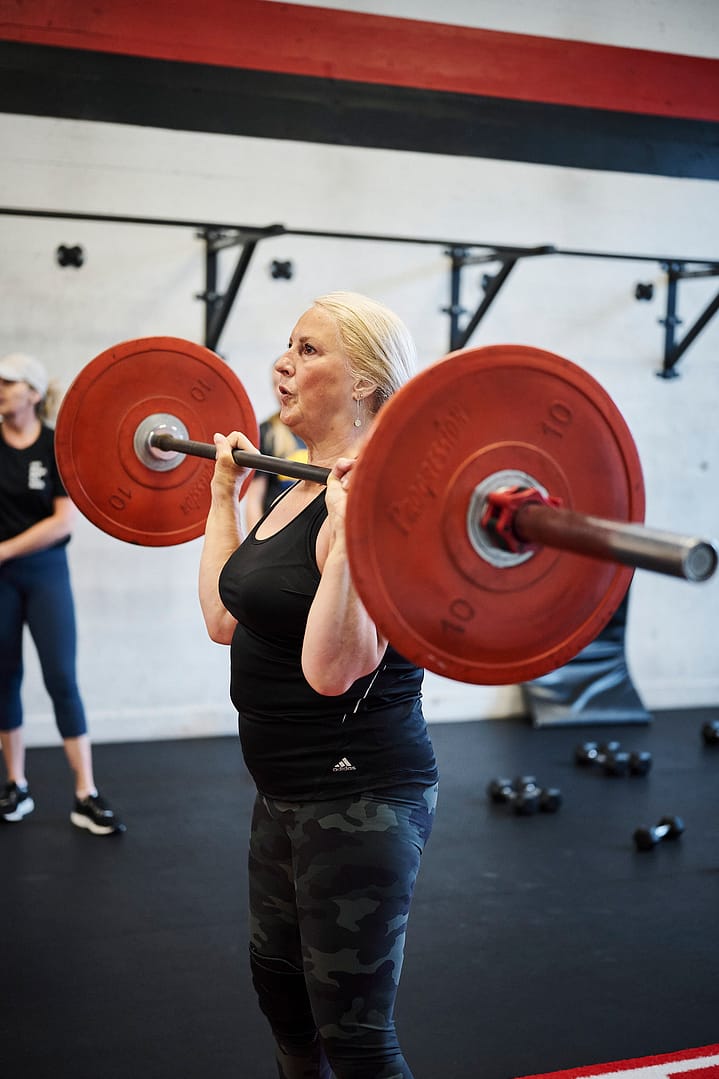
Maintaining muscular strength becomes increasingly important as we age. Strength training supports our ability to perform everyday activities, maintain physical function, and continue participating in the activities we enjoy.
Research also suggests that combining aerobic activity and muscle-strengthening exercise may be particularly valuable.
A study published in JAMA Network Open examined muscle-strengthening and aerobic physical activity among adults aged 65 and older. Meeting recommendations for both forms of exercise was associated with a lower risk of all-cause mortality (Webber et al., 2022).
A separate study involving more than 500,000 adults similarly found that balanced amounts of moderate aerobic activity, vigorous aerobic activity, and muscle-strengthening activity were associated with lower mortality risk (López-Bueno et al., 2023).
That makes a strong argument for not choosing between cardio and strength.
Train both.
Can You Really Improve Strength and Cardio at the Same Time?
One concern people sometimes have about hybrid training is that doing cardio will interfere with their strength gains—or that strength training will prevent them from improving their endurance.
The research is more encouraging.
A systematic review and meta-analysis of 21 studies involving 796 participants examined concurrent training, meaning programs that included both resistance and aerobic exercise. Researchers found that concurrent training produced similar improvements in maximal strength compared with strength training alone, while cardiorespiratory improvements were not significantly impaired compared with aerobic training alone (Pito et al., 2022).
Another systematic review examining middle-aged and older adults found concurrent training to be an effective strategy for developing both cardiorespiratory fitness and muscular strength (Petré et al., 2022).
This doesn’t mean every workout needs to be brutally difficult or that everyone should train like a competitive HYROX athlete.
It means that appropriately programmed strength and cardiovascular exercise can coexist extremely well.
Is HYROX Training Good for Longevity?
This is where an important distinction needs to be made.
HYROX provides an engaging framework for training several qualities associated with healthy aging: cardiovascular fitness, muscular strength, muscular endurance, movement capacity, and general physical activity.
And there may be another underrated benefit: HYROX gives people something to train for.
Consistency is one of the biggest challenges in fitness. Having a race on the calendar, training alongside other people, tracking progress, and developing new skills can turn exercise from something you feel obligated to do into something you actively want to improve at.
For long-term health, that matters.
The “best” training program on paper isn’t particularly useful if you don’t enjoy it enough to keep doing it.
HYROX Training in Victoria at BPM Fitness Centre
At BPM Fitness Centre in Victoria, BC, we love HYROX because it brings together so many elements of fitness in one training style.
As a HYROX Training Centre, BPM offers HYROX-focused training that can help athletes develop their running, strength, conditioning, and familiarity with HYROX movements in a coached environment.
And you don’t need to be an elite athlete—or even have a HYROX race booked—to benefit from hybrid training.
The goal can simply be to become a stronger runner, improve your cardiovascular fitness, build strength, challenge yourself, and stay capable for years to come.
HYROX may be one of the fastest-growing sports in fitness right now, but the principles behind it aren’t a fad.
Lift. Run. Carry. Move. Build your engine. Stay strong.
References
HYROX. (n.d.). The fitness race. https://hyrox.com/the-fitness-race/
Lang, J. J., Prince, S. A., Merucci, K., Cadenas-Sanchez, C., Chaput, J.-P., Fraser, B. J., Manyanga, T., McGrath, R., Ortega, F. B., Singh, B., & Tomkinson, G. R. (2024). Cardiorespiratory fitness is a strong and consistent predictor of morbidity and mortality among adults: An overview of meta-analyses representing over 20.9 million observations from 199 unique cohort studies. British Journal of Sports Medicine, 58(10), 556–566. https://doi.org/10.1136/bjsports-2023-107849
López-Bueno, R., Ahmadi, M., Stamatakis, E., Yang, L., & del Pozo Cruz, B. (2023). Prospective associations of different combinations of aerobic and muscle-strengthening activity with all-cause, cardiovascular, and cancer mortality. JAMA Internal Medicine, 183(9), 982–990.
Petré, H., Hemmingsson, E., Rosdahl, H., & Psilander, N. (2022). Development of maximal dynamic strength during concurrent resistance and endurance training in untrained, moderately trained, and trained individuals: A systematic review and meta-analysis. Sports Medicine, 52, 991–1010.
Pito, P. G., Cardoso, J. R., Tufano, J. J., & Guariglia, D. (2022). Effects of concurrent training on 1RM and VO₂ in adults: Systematic review with meta-analysis. International Journal of Sports Medicine, 43(4), 297–304. https://doi.org/10.1055/a-1506-3007
Reuters. (2026, August 19). As HYROX’s popularity soars, fitness-racing hybrid chases Olympic dream. Reuters.
Webber, B. J., Piercy, K. L., Hyde, E. T., & Whitfield, G. P. (2022). Association of muscle-strengthening and aerobic physical activity with mortality in US adults aged 65 years or older. JAMA Network Open, 5(10), e2236778. https://doi.org/10.1001/jamanetworkopen.2022.36778
World Health Organization. (2020). WHO guidelines on physical activity and sedentary behaviour. World Health Organization.