Summer in Victoria is an invitation to get outside. From hiking Mount Finlayson and exploring Goldstream Provincial Park to cycling, kayaking, golfing, and running, Vancouver Island offers endless ways to stay active. However, enjoying these activities requires more than cardiovascular endurance. Strength training for balance, mobility, and muscular control also play an important role.
A well-designed strength training program can help you climb hills more efficiently, carry a backpack comfortably, navigate uneven terrain, and recover between outdoor adventures. At BPM Fitness Centre, our coaches help people of all fitness levels build practical strength that transfers from the gym into the activities they love.
Why Is Strength Training Important for Hiking?
Hiking is a full-body activity. Your glutes, quadriceps, hamstrings, calves, and core work together to move you uphill. Your upper body helps stabilize your backpack and maintain good posture. Descending can be equally demanding because your muscles must control your body against gravity with every step.
Exercises such as squats, lunges, step-ups, deadlifts, loaded carries, and rows strengthen movement patterns commonly used on the trail. Stronger legs can make steep climbs feel more manageable, while improved muscular endurance helps you maintain steady movement over longer distances.
Improve Stability on Uneven Terrain
Hiking trails are rarely flat or predictable. Rocks, roots, loose gravel, mud, and changing elevations require your ankles, knees, and hips to adapt constantly. Strengthening the muscles surrounding these joints can improve stability and help your body manage uneven terrain.
Single-leg exercises are particularly useful because hiking involves repeatedly transferring your weight from one leg to the other. Split squats, reverse lunges, single-leg deadlifts, and step-ups can build lower-body strength while improving balance and coordination.
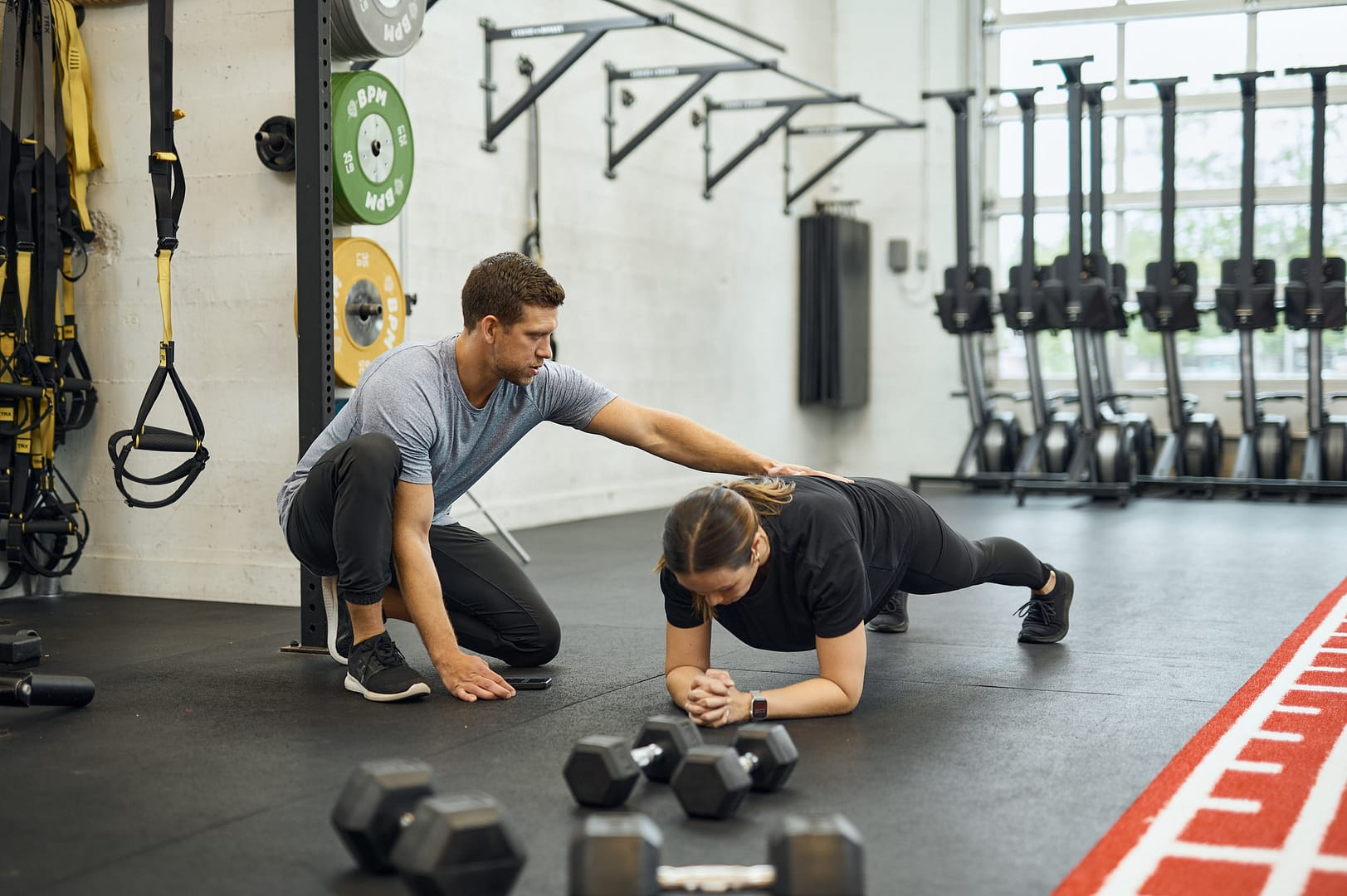
At BPM, our personal training programs can be customized around your fitness level, hiking experience, movement patterns, and summer goals. Your trainer can adjust each exercise so your program remains safe, effective, and appropriately challenging.
Make Hills and Stairs Feel More Manageable
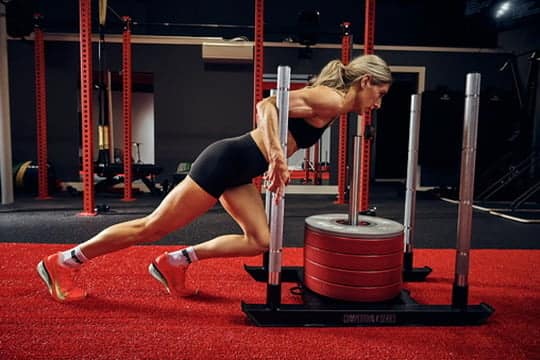
Uphill hiking requires repeated hip and knee extension—the same basic actions trained through squats, deadlifts, step-ups, and sled exercises. Developing strength in these patterns can help with climbing hills, walking stairs, and completing routes with significant elevation gain.
Downhill hiking creates a different challenge. Your quadriceps must control your descent with every step, which explains why your thighs may feel especially tired after a long downhill section.
Controlled step-downs, reverse lunges, and split squats can prepare your legs for this demand. Better muscular control can also help you remain steady when a trail becomes steep or technical.
Build Strength for Carrying a Backpack
Even a daypack adds resistance to every step. A heavier pack used for camping or multi-day hiking places additional demands on your legs, core, shoulders, and upper back.
Loaded carries are an excellent form of functional strength training for hikers. They teach you to maintain posture and stability while moving under resistance. Rows and other upper-body exercises can strengthen the muscles that support your shoulders and backpack straps.
This type of training also applies to carrying golf clubs, lifting a kayak, moving camping supplies, gardening, travelling with luggage, or transporting equipment to the beach.
Strength Training Supports Other Summer Activities
The benefits of strength training extend beyond hiking:
- Cyclists benefit from stronger hips and legs when climbing and accelerating.
- Runners need lower-body stability to manage repeated impact.
- Golfers use strength, mobility, and rotational control throughout the swing.
- Kayakers and paddleboarders rely on core, back, shoulder, and grip strength.
- Recreational athletes need balance, coordination, and power for field and court sports.
- Campers and gardeners benefit from being able to lift, carry, squat, and kneel comfortably.
Runners looking for more information about their mechanics and aerobic fitness can also complete BPM’s Performance+ Running Assessment, which includes treadmill gait analysis, biomechanical screening, and an estimated VO₂ max evaluation.
Combine Strength, Endurance, and Recovery
Strength is only one part of summer activity preparation. Hiking and outdoor sports also require cardiovascular fitness, mobility, hydration, and recovery. Combining resistance training with walking, progressive hikes, cycling, running, or another form of aerobic exercise provides a balanced approach.
BPM’s group fitness classes in Victoria make it easy to develop multiple areas of fitness. Strength Conditioning builds strength and exercise mechanics, while Bootcamp and Hybrid Strength combine resistance exercises with functional conditioning. Cross Conditioning and HYROX classes further develop endurance, coordination, and full-body work capacity.
Progress gradually by increasing your hiking distance, elevation, backpack weight, and workout intensity over time. Rest days and lighter sessions allow your body to adapt between demanding workouts and outdoor adventures.
Prepare for Summer at BPM Fitness Centre
You do not need to be an experienced lifter or advanced hiker to benefit from strength training. The right program should match your current ability and prepare you for the activities you genuinely enjoy.
Located at 800B Cloverdale Avenue in Victoria, BC, BPM Fitness Centre offers expert coaching in a welcoming, intimidation-free environment. Whether you want to hike farther, feel stronger on hills, improve your summer sports performance, or build useful everyday strength, our team can help.
Explore our fitness class options, seek out a personal trainer, and build your strength—then put it to work wherever summer takes you.
References
- Werner, I., Valero-Cuevas, F. J., & Federolf, P. (2023). Mountain hiking: Prolonged eccentric muscle contraction during simulated downhill walking perturbs sensorimotor control loops needed for safe dynamic foot–ground interactions. International Journal of Environmental Research and Public Health, 20(7), 5424. https://pubmed.ncbi.nlm.nih.gov/37048038/
- Llanos-Lagos, C., Ramirez-Campillo, R., Moran, J., & Sáez de Villarreal, E. (2024). Effect of strength training programs in middle- and long-distance runners’ economy at different running speeds: A systematic review with meta-analysis. Sports Medicine, 54(4), 895–932. https://pubmed.ncbi.nlm.nih.gov/38165636/
- Šuc, A., Šarko, P., Pleša, J., & Kozinc, Ž. (2022). Resistance exercise for improving running economy and running biomechanics and decreasing running-related injury risk: A narrative review. Sports, 10(7), 98. https://pubmed.ncbi.nlm.nih.gov/35878109/
- Hu, X., Charles, J. P., Akay, T., Hutchinson, J. R., & Blemker, S. S. (2020). Muscle eccentric contractions increase in downhill and high-grade uphill walking. Frontiers in Bioengineering and Biotechnology, 8, 573666. https://pubmed.ncbi.nlm.nih.gov/33178672/