Getting older shouldn’t mean giving up the activities you love. It actually becomes more important to continue (or begin) strength training as we age to maintain independence and mobility. Whether you want to hike Vancouver Island’s trails, carry groceries comfortably, play with your grandchildren, or feel confident climbing stairs, strength matters.
At BPM Fitness Centre we believe strength training belongs in every stage of life. Resistance training helps older adults maintain physical function, counter age-related muscle loss, and build the capacity to keep participating in everyday life. Your training may evolve with age, but the reasons to keep going become even more meaningful.
We’ve recently touched on the importance of strength training in retirement for both CHEK News and Times Colonist if you wish to read more.
What Is Sarcopenia?
Sarcopenia is a muscle condition associated with aging that involves declining muscle strength and muscle mass. It can affect everyday movement, making tasks such as rising from a chair, carrying bags, or climbing stairs increasingly challenging.
Although aging contributes to these changes, declining strength isn’t something we simply have to accept without action. The National Institute on Aging explains that many older adults can increase strength through exercise, helping preserve mobility and independence.
That makes strength training as we age an investment in future freedom. Building and maintaining muscle gives your body more capacity for the demands of daily life.
How Does Strength Training Help Counter Sarcopenia?
Resistance training challenges muscles against an external load. That might mean dumbbells, resistance bands, barbells, or your own body weight. With an appropriate challenge, recovery, and gradual progression, training can improve muscular strength and physical performance.
Research involving older adults with sarcopenia has found improvements in measures including grip strength, knee extension strength, walking speed, and functional mobility following resistance training. Changes in muscle size are less consistent, so progress shouldn’t be judged by appearance alone.
At BPM, personal training starts with your individual starting point. Your exercise history, current abilities, and goals help shape a plan that gives you an appropriate challenge and a clear direction.
Stronger Muscles Support Everyday Independence
Functional strength training connects what happens in the gym with what matters outside it.
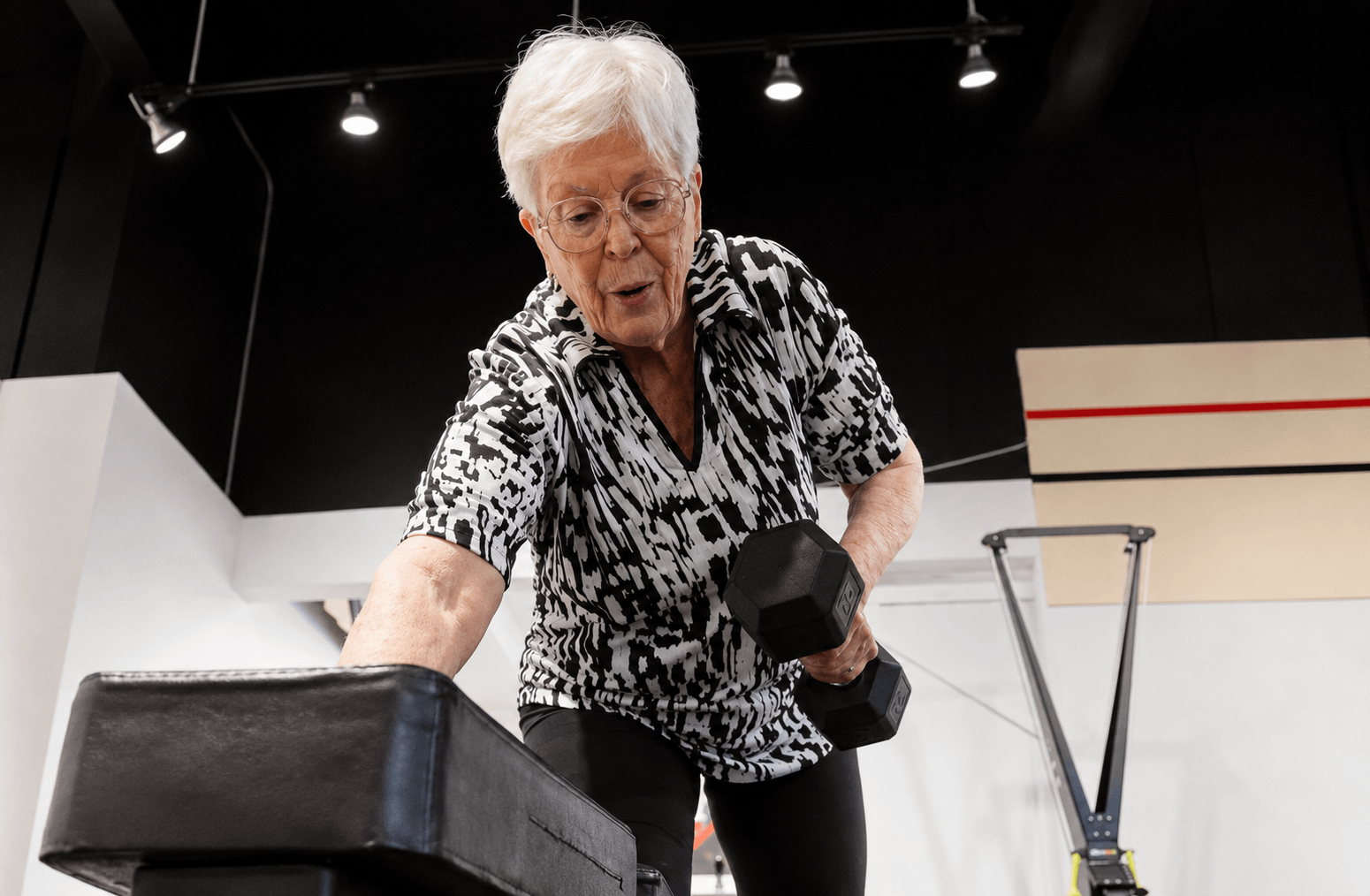
A squat can help develop the strength needed to stand from a chair. A step-up practises moving onto a higher surface. Rows train pulling strength, while loaded carries challenge your ability to hold and transport weight.
These exercises can be adapted to different abilities. A beginner might practise standing from an elevated bench, while a more experienced participant might use added resistance.
The goal is practical: develop strength that supports gardening, travelling, walking the dog, and staying involved in your community. Strength training as we age and aging healthily means maintaining the ability to do things that make life enjoyable.
Strength and Balance Belong Together
Maintaining independence also means feeling steady on your feet. Lower-body and trunk strength contribute to balance, but a complete older adult fitness routine should include balance practice alongside resistance training.
The CDC recommends combining aerobic activity, muscle-strengthening exercise, and balance activities for older adults. This combination supports physical function and helps reduce fall risk.
At BPM, discuss your goals and any balance concerns with your trainer. Exercise selection, support, and difficulty should reflect your current abilities. Building confidence begins with a challenge you can manage, then developing from there.
Is It Too Late to Start Lifting Weights?
No. You don’t need decades of gym experience to begin working on your strength.
Starting strength training as we age after 50, 60, or 70 means choosing a suitable entry point. That could involve learning basic movement patterns, using manageable resistance, and allowing enough recovery between sessions.
If you have osteoporosis, recent surgery, unexplained weakness, or a health condition that affects exercise, speak with your healthcare provider about relevant precautions. Share those recommendations with your trainer.
BPM’s approach to personal training is individual. You bring your starting point; we help you identify achievable next steps.
How Often Should Older Adults Strength Train?
For adults aged 65 and older, the CDC recommends muscle-strengthening activities at least twice weekly, working all major muscle groups, alongside aerobic and balance activities. Your routine should reflect your abilities and health conditions.
Two appropriately planned sessions can provide a practical foundation. Consistency matters, and progress can include better technique, more repetitions, increased resistance, or greater ease with everyday tasks.
Walking remains a valuable habit, but dedicated resistance exercise gives your muscles a different challenge. Pairing both creates a more rounded approach to active aging.
Find Your Strength at BPM Fitness Centre
Looking for strength training in Victoria, BC, with coaching and community?
BPM offers Strength Conditioning classes that focus on building strength, developing exercise mechanics, and improving conditioning. The 60-minute StrengthCon format welcomes different ages and abilities, with coaches providing guidance throughout.
If you prefer individual attention, personal training offers a tailored starting point. You can also explore our group fitness classes and current class schedule to find options that fit your routine.
You deserve to feel capable at every age. Whether you’re returning to exercise or beginning for the first time, BPM Fitness Centre is here to help you build strength for the life you want to live.
Connect with BPM’s personal training team and take your first step toward a stronger future.
References
- Chen, N., He, X., Feng, Y., Ainsworth, B. E., & Liu, Y. (2021). Effects of resistance training in healthy older people with sarcopenia: A systematic review and meta-analysis of randomized controlled trials. European Review of Aging and Physical Activity, 18, Article 23. https://pubmed.ncbi.nlm.nih.gov/34763651/
- Chen, Y. C., Chen, W.-C., Liu, C.-W., Huang, W.-Y., Lu, I., Lin, C. W., Huang, R. Y., Chen, J. S., & Huang, C. H. (2023). Is moderate resistance training adequate for older adults with sarcopenia? A systematic review and network meta-analysis of RCTs. European Review of Aging and Physical Activity, 20, Article 22. https://pubmed.ncbi.nlm.nih.gov/38030985/
- Peng, D., Zhang, Y., Wang, L., & Zhang, S. (2024). Effects of over 10 weeks of resistance training on muscle and bone mineral density in older people with sarcopenia over 70 years old: A systematic review and meta-analysis of randomized controlled trials. Geriatric Nursing, 60, 304–315. https://pubmed.ncbi.nlm.nih.gov/39368450/