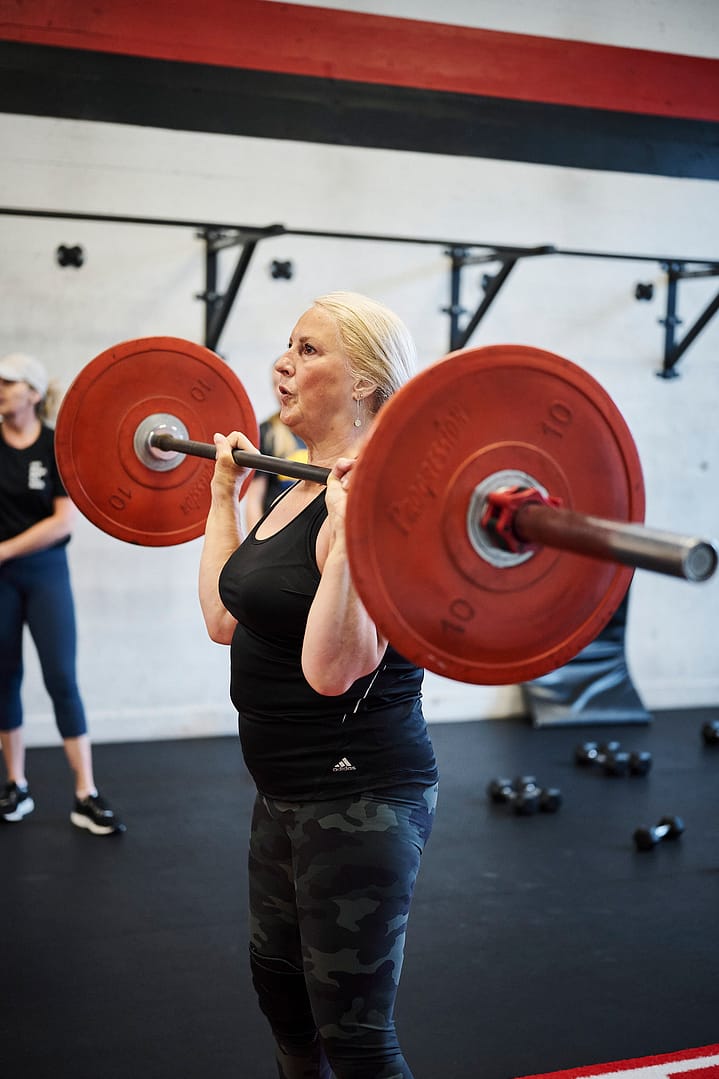

When most people think about exercise, they think about building muscle, improving cardiovascular fitness, losing weight, or becoming stronger. While these are all important benefits of physical activity, there is another powerful reason to move your body regularly: exercise can improve mental health and overall well-being.
At BPM Fitness Centre in Victoria, BC, we believe fitness is about more than what you can lift, how fast you can run, or what you see in the mirror. Exercise can provide structure, social connection, a sense of accomplishment, and an opportunity to step away from the stresses of everyday life.
The Connection Between Exercise and Mental Health
Mental health influences how we think, feel, manage stress, work, learn, and connect with the people around us. The World Health Organization describes mental health as a state of mental well-being that helps people cope with the stresses of life and contribute to their community.
Research continues to show a strong connection between exercise and mental health. A large 2023 umbrella review published in the British Journal of Sports Medicine examined evidence on physical activity interventions for depression, anxiety, and psychological distress. The researchers concluded that physical activity was highly beneficial for improving symptoms across a wide range of adult populations.
More recently, a 2024 systematic review and network meta-analysis published in The BMJ found that exercise can be an effective intervention for depression, with walking or jogging, strength training, and other forms of structured movement demonstrating meaningful benefits.
Exercise should not automatically be viewed as a replacement for professional mental health treatment, medication, or counselling when those services are needed. Instead, physical activity can be an incredibly valuable part of a broader approach to mental and physical wellness.
Exercise Can Help Reduce Stress
Stress is a normal part of life, but chronic stress can affect sleep, energy levels, concentration, and overall quality of life.
Exercise provides an opportunity to redirect your attention toward movement, breathing, technique, and the task in front of you. For many people, a workout becomes dedicated time away from emails, work deadlines, social media, and other daily pressures.
At BPM Fitness Centre, our fitness classes create structured opportunities to move, challenge yourself, and focus on your workout. If you’re not sure what works best for you, we have a variety to try. This includes HYROX, Strength Conditioning, Cross Conditioning, among others.
Sometimes, that hour of movement is what makes the biggest difference for your mental health.
Exercise Can Build Routine and a Sense of Accomplishment
Mental health can be influenced by our daily habits and routines.
Scheduling a workout creates a specific commitment in your day. You arrive, move your body, complete the session, and leave knowing you accomplished something positive for your health.
Progress in the gym can also be incredibly rewarding, further entwining exercise and mental health.
Maybe you lift a weight that once felt impossible, or you complete your first HYROX class. Maybe you attend three workouts in one week after months of inactivity. Perhaps, you simply walk through the doors of a gym when doing so previously felt intimidating.
We believe progress looks different for everyone. In addition to our mentioned fitness classes, our personal training programs are designed to meet people at different fitness levels and help them build sustainable habits through evidence-based exercise and professional coaching.
You Don’t Need to Be Motivated Every Day
One of the biggest misconceptions about fitness is that consistent exercisers are always motivated.
They aren’t.
Motivation changes from day to day. Building a routine, scheduling workouts, working with a coach, and training within a supportive community can make exercise easier to maintain when motivation is low.
Start with something manageable. Choose activities you enjoy. Find an environment where you feel comfortable.
Most importantly, remember that movement does not need to be perfect to be valuable for your mental health.
More on Group Fitness: Social Connection and Community
One of the most overlooked mental health benefits of exercise may have less to do with the workout itself and more to do with the people around you.
Social connection and community can play an important role in overall well-being. Group exercise creates opportunities to see familiar faces, interact with coaches, train alongside other people, and become part of a shared experience.
Our goal has always been to create a welcoming fitness community in Victoria, BC where people of different fitness levels can move, learn, and train together.
You may arrive for the workout, but the relationships you build can become an important reason to keep coming back.
Move your body. Build your routine. Find your community.
Your mental and physical health are worth investing in.
References
- Singh, B., Olds, T., Curtis, R., Dumuid, D., Virgara, R., Watson, A., Szeto, K., O’Connor, E., Ferguson, T., Eglitis, E., Miatke, A., Simpson, C. E. M., & Maher, C. (2023). Effectiveness of physical activity interventions for improving depression, anxiety and distress: An overview of systematic reviews. British Journal of Sports Medicine, 57(18), 1203–1209. https://pubmed.ncbi.nlm.nih.gov/36796860/
- Noetel, M., Sanders, T., Gallardo-Gómez, D., Taylor, P., Del Pozo Cruz, B., van den Hoek, D., Smith, J. J., Mahoney, J., Spathis, J., Moresi, M., Pagano, R., Pagano, L., Vasconcellos, R., Arnott, H., Varley, B., Parker, P., Biddle, S., & Lonsdale, C. (2024). Effect of exercise for depression: Systematic review and network meta-analysis of randomised controlled trials. BMJ, 384, e075847. https://pubmed.ncbi.nlm.nih.gov/38355154/
- Heissel, A., Heinen, D., Brokmeier, L. L., Skarabis, N., Kangas, M., Vancampfort, D., Stubbs, B., Firth, J., Ward, P. B., Rosenbaum, S., Hallgren, M., & Schuch, F. (2023). Exercise as medicine for depressive symptoms? A systematic review and meta-analysis with meta-regression. British Journal of Sports Medicine, 57(16), 1049–1057. https://pubmed.ncbi.nlm.nih.gov/36731907/
- Pearce, M., Garcia, L., Abbas, A., Strain, T., Schuch, F. B., Golubic, R., Kelly, P., Khan, S., Utukuri, M., Laird, Y., Mok, A., Smith, A., Tainio, M., Brage, S., & Woodcock, J. (2022). Association between physical activity and risk of depression: A systematic review and meta-analysis. JAMA Psychiatry, 79(6), 550–559. https://pubmed.ncbi.nlm.nih.gov/35416941/